2026-11-12 ·
Hardwood Floor Water Damage in Edmond: Save or Replace
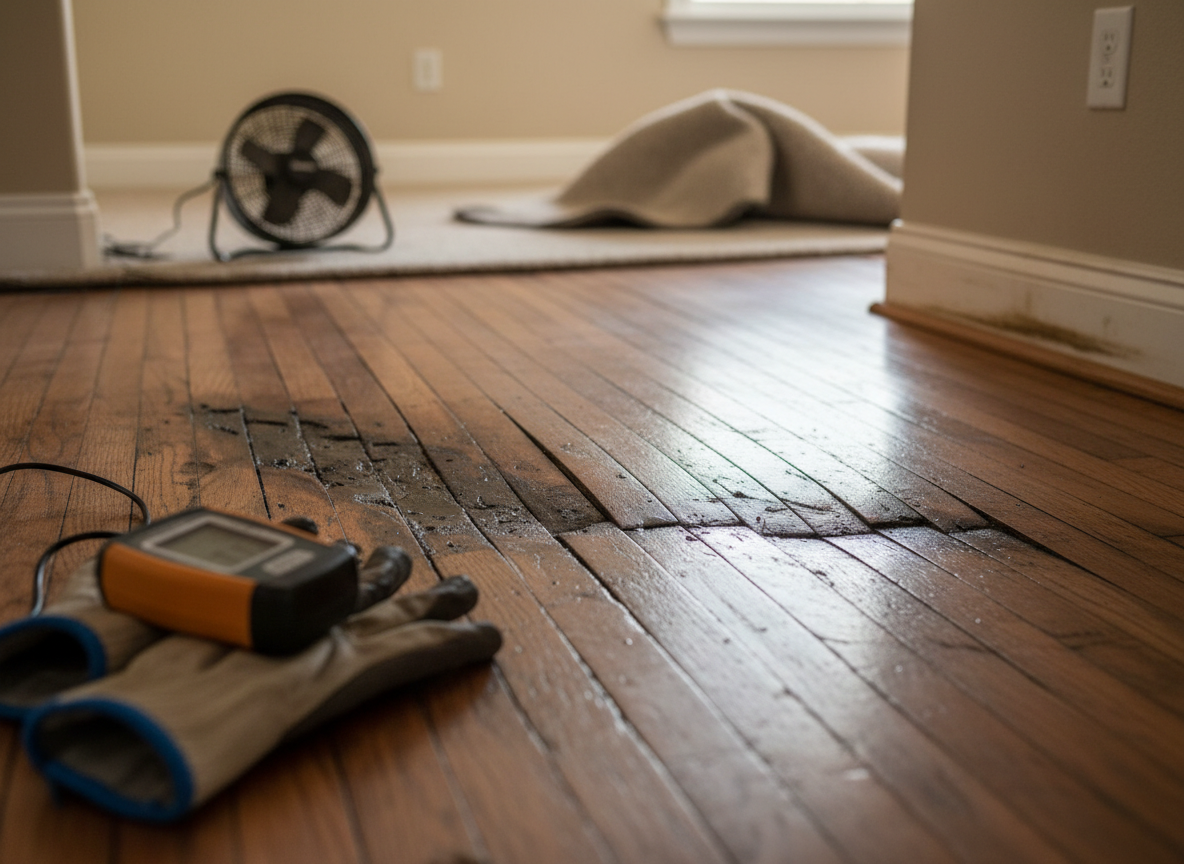
Hardwood floors that get wet in an Edmond home can often be saved if drying starts within a day or two and the water was clean. Boards soaked by sewage or outside flood water, or left wet for a week, usually have to come out. The way to know is to measure, not guess.
What water does to wood floors
Wood takes in water and swells. When the bottom of a board is wetter than the top, the edges rise and the middle dips. That is called cupping. If the floor is sanded flat while still wet, the boards later dry and the middle rises. That is crowning, and it is why patience matters.
Solid hardwood can swell enough to push against walls and lift off the subfloor, called buckling. Engineered hardwood has a thin wood layer over plywood, so it handles small spills but can delaminate after a long soak.
Common sources in Edmond homes
Most Edmond homes are built on concrete slabs, and hardwood or engineered wood over a slab is often glued down or floated over a pad. Water from a dishwasher, refrigerator ice maker line or water heater gets under the boards and has nowhere to go.
Spring storms are the other big source. Wind-driven rain gets under patio doors and into front entries, and hail-damaged roofs leak into upstairs rooms. In older homes on crawl spaces, a broken pipe below can soak the subfloor from underneath.
How to tell if the floor can be saved
A restoration crew checks three things. First, the water category. Clean water gives the best odds. Gray water lowers them. Sewage or flood water means the boards are removed. Second, how long the wood was wet. Under 48 hours is a good sign. Third, the moisture reading in the wood and the subfloor compared with a dry area of the same floor.
Signs the floor may come back:
- Cupping is mild and even across the room.
- Boards are still tight to the subfloor.
- No black staining along the seams.
- Moisture readings drop steadily each day of drying.
Signs replacement is likely:
- Boards have lifted or buckled.
- Dark or black stains along the grain or seams.
- A musty smell from under the floor.
- Readings stay high after several days of drying.
How wet hardwood is dried
Standing water is extracted first. Then drying mats or panels may be placed on the floor to pull water up through the boards, along with air movers and dehumidifiers. Wood floors dry slowly. One to two weeks is normal, longer than carpet or drywall.
Humid Oklahoma summers slow this down, so dehumidifiers run the whole time. The goal is a reading close to an unaffected part of the same floor. Once it gets there, the floor is left to settle for a few more weeks before any sanding.
What it costs
National cost guides list hardwood refinishing at about $3 to $8 per square foot, depending on the finish and how much sanding is needed. Replacing solid hardwood runs about $6 to $18 per square foot installed, depending on species and grade. Drying equipment for a wet room usually adds $1,000 to $2,500 to the job.
Refinishing makes sense when cupping relaxes after drying. Replacement makes sense when boards are stained, loose or soaked by dirty water. A written estimate should show both paths side by side when the outcome is unclear.
What to do right now
- Stop the water at the main valve or the appliance valve.
- Wipe up surface water and take wet rugs off the floor.
- Take photos of the floor and the source of the water.
- Do not sand, nail or cover the floor while it is wet.
- Call for drying so equipment is placed before the boards cup further.
If the water was sewage, read sewage backup cleanup in Edmond first, because safety comes before saving the floor. For the full drying process, see water damage restoration.